

OLD-FASHIONED CHIVALROUS ROMANCE 101 – A GUIDE
One of our main focuses at The Silver Petticoat Review is old-fashioned chivalrous romance in entertainment, stories that prioritize emotional connection, soul love, and classic romance tropes.
Old-fashioned chivalrous romance is something many of us love – but don’t even have a definition for. We’ve put this guide out there to fill the void and will take you through definitions and detailed checklists to answer that question.
You may be a writer seeking guidance and inspiration, or a romance fan seeking a deeper understanding. This guide provides the framework for understanding this enduring style.
WHAT IS OLD-FASHIONED CHIVALROUS ROMANCE?
We define old-fashioned chivalrous romance as a storytelling technique using chivalry and classic romance tropes to tell a love story.
We define old-fashioned chivalrous romance as a storytelling technique using chivalry and classic romance tropes to tell a love story. Whether in books, film, TV, or even theater, the storyteller uses an old-fashioned approach (or is, in fact, an “old” classic like an Austen novel) to showcase a swoony, emotional romance.
However, we should note that “old-fashioned chivalric” love stories don’t necessarily have to appear in an old-fashioned story (although many do)—for example, the love story between Cornelia and Eli in the recent limited series The English. The TV show features violence and a modern filmmaking style, but the love story itself is inspired by Old Hollywood romantic epics and uses old-fashioned chivalric techniques.
These chivalric and old-fashioned romance tropes make many love stories admired and influential! Whether it’s Mr. Darcy’s love confessions, Mr. Thornton willing Margaret to “look back” at him as she leaves him behind, Johnny pulling Baby up to the stage to dance with him in front of everyone, or even Jack giving Rose the world’s most epic kiss on the Titanic.
The audience and fans remember these moments, love them, and even watch them on repeat!
The lack of these classic romance moments (mixed with bad scripts and filmmaking) in many stories today has hurt the romance genre in the entertainment industry. On the other hand, romance in the publishing industry continues to thrive.
Thankfully, we’re currently experiencing a romance resurgence in entertainment, driven by Hallmark, Netflix, and other streaming platforms. However, many (though not all) need higher quality to be more memorable. Thus, it’s essential to create quality love stories and remember what makes a love story unforgettable.
So, let’s get started!
Below, we provide background information, a detailed checklist for traditional chivalrous romance in entertainment, and a list of what it isn’t. Beyond that, we have some examples to get you started in the storytelling world of chivalrous love. Then, answer a couple of questions for clarification.
RELATED The Appeal of the Old-Fashioned Romance
WHAT DOES OLD-FASHIONED MEAN?
Before moving on to the checklist, we want to gather background information to clarify the old-fashioned chivalrous romance style. First, we need to define “old-fashioned.”
Let’s take a look.
According to the Oxford English Dictionary:
In or according to styles or types no longer current or common; not modern.
According to Dictionary.com:
Having the…tastes of earlier times
And according to Merriam-Webster:
Of, relating to, or characteristic of a past era
If we combine all these definitions, we arrive at the styles, tastes, and characteristics of a past era. Thus, old-fashioned romance is either “of” the past or influenced by it.

As a contemporary example, if you insert some of these characteristics and classic romance tropes into a modern story, you have old-fashioned romance! The perfect example? Kate and Leopold. The film brings a man with the styles, tastes, and characteristics of a past time (because he’s from the past) into the present day.
We know that “old-fashioned” sometimes carries negative connotations. People think “stuffy,” “outdated,” and “boring.” But really, what’s boring about Mr. Darcy?
Rather, we mean by old-fashioned romance that a story uses classic romance tropes to tell a compelling, authentic love story across numerous genres, rather than focusing on overly modern trends that often lead to anti-romances masquerading as romances.
We also don’t embrace the anti-HEA trend that prioritizes subversion over satisfying storytelling. If you don’t like romance, don’t write a romance! That’s not to say a romance can’t be a romantic tragedy – it can. But it shouldn’t be anti-romance and promote itself as the opposite.
What does chivalrous mean?
Now, let’s examine the definition and origin of “chivalrous” and “chivalry.” The English Oxford Dictionary defines chivalry as:
The medieval knightly system with its religious, moral, and social code.
In a romantic context, chivalry is behavior aligned with a code of conduct. The sub-definitions of chivalry go further:
The combination of qualities expected of an ideal knight, namely courage, honour, courtesy, justice, and a readiness to help the weak.
Courteous behaviour, especially that of a man towards women.
Finally, it’s essential to explore the origins. The Oxford English Dictionary explains that the origins of the words chivalry and chivalrous date back to “Late Middle English (in the sense ‘characteristic of a medieval knight’): from Old French chevalerous, from chevalier.”
The Roots of Chivalrous Romance
Many may not know that the romance we understand today is largely due to the chivalric knights and troubadours of the Middle Ages.
Arguably, one of the first “romance novels” wasn’t technically a novel but a legend that was eventually written down. The famous love story of Tristan and Isolde, an influential romance from the 12th century, tells the tragic tale of the knight Tristan and the Irish princess Isolde.
This story, the courtly love between Knights and Ladies, and the poems of the troubadours (French Medieval Lyric Poets) influenced the future of romance in entertainment and life.
As Joseph Campbell explains, troubadours were “the first ones in the West that really considered love in the sense that we think of it now, as a person-to-person relationship.”
How can we appreciate romance today without understanding its origins? One of the most defining qualities of great romances is chivalrous behavior from both men and women.
One Main Romance Influence = Jane Austen and the Domestic Revolution
Other significant influences of the contemporary, old-fashioned, chivalrous romance style include classic fairy tales, folklore, Jane Austen, the Brontë sisters, vintage romances, classic films, and romantic period dramas. However, the primary influence is Jane Austen, who revolutionized romance.
According to Princeton Professor April Alliston in the documentary Love Between the Covers, Jane Austen “domesticated romance.” In the same documentary, Sarah Lyons of The Popular Romance Project said:
One of the things that she did, was the first woman to do, was argue that men need to deserve their companion just as much as women need to deserve their companion. And so Elizabeth has to change, absolutely, she has to lose her prejudice towards Darcy. But, it’s called Pride and Prejudice and Darcy needs to change too. And I think that that is one of the things that Austen did before anyone else. And she made it almost a requirement because her books became the structural foundation of the domestic novels. It moved through the 19th and 20th century because she became the icon…of domestic novels and the marriage plot.
During the Age of Enlightenment in the 18th century, people began marrying for love more often, which may have inspired Jane Austen’s ideas of equality and love. And it’s Jane Austen who influences all romance in stories today.
But with today’s focus on hookup culture, casual dating, and other emotionless ways of romancing in stories, we risk returning to a time when romance was devoid of love, both in entertainment and in life.
Like Jane Austen, we champion stories that use elements of old-fashioned romance and chivalry for a modern world. We want love stories (in all genres) that celebrate equality, with authentic romance, emotion, service, and chivalry.
With this style, we’re promoting the idea that love and romance in stories should not only exist (romance is not anti-feminist, as some argue), but also be EMOTIONAL and centered on human connection. To do that, we believe there must be more chivalrous romances.
Focusing on classic romance and chivalrous tropes will make love stories universally appealing, helping the romance resurgence grow!
We’re not saying there shouldn’t be other romance styles; we should just welcome the variety!
OLD-FASHIONED CHIVALROUS ROMANCE CHECKLIST – AS DEFINED BY US:
Every love story does not have to include all of these elements, but it should include some to capture the “overall” feel.

The Soul Connection
- Soul connection over shallow attraction: A focus on “soul love.”
- Love over lust: Attraction and passion exist, but never without love as the foundation.
- Emotional growth over explicit content: The focus remains on the bond. Love scenes, when used, are necessary to the story.
- A meeting of the minds: The couple connects intellectually and philosophically.
- Kindred spirits: The romantic duo often have a deep connection.
- Spiritual synchronicity: (Rare) Characters so alike in spirit they become one and can “feel” each other’s presence or recognize danger from a distance.
- Deep conversations: The relationship is built on meaningful dialogue.
- Sacrifice & Genuine Love: Love is shown through work and what one is willing to do for the other. The love is genuine.
The Romantic Aesthetic (The “Swoon” Factor)
- Smoldering stares: Intense eye contact or stares from a distance that convey unspoken emotion. (For example, Mr. Darcy!)
- Swoon-worthy romantic moments: Saving or protecting each other (e.g., the female is not a “whimpering fool,” or “damsel-in-distress” but both can be protected by the other).
- Grand gestures: Large, public, or significant acts of love. (e.g., Gilbert trading places with Anne so she can stay in Avonlea to teach and be closer to home.)
- The power of touch: A touch of the hand, a hug, a dance, or a hand to a cheek carries immense weight.
- The emotional kiss: A kiss that is romantic and soulful, usually following a significant build-up.
- Obstacles: External or internal forces that keep the pair apart, building tension.
Character Archetypes & Behavior
- Romantic Heroes – Chivalry is not dead: Actions align with a code of courage, honor, and courtesy like a knight in shining armor – but without misogyny! Romantic Heroes fit well into the old-fashioned romance style.
- Manners and conduct: Male heroes usually have old-fashioned manners (even if they appear rude, like Darcy, or villainous, like Heathcliff – who returns like a devil in well-mannered disguise).
- Layered characters: They have diverse backgrounds, flaws, and complex histories.
- Diverse Heroines: The female lead can be “strong,” but she can also be soft, innocent, or troubled. It’s about the depth of her character.
- The Byronic Hero: The inclusion of dark, brooding, or mysterious romantic leads is fine.
- A Good Story: Romance doesn’t need to be “realistic” or “healthy,” just a good story. (e.g., Romeo and Juliet)
- Respect: A fundamental respect for both men and women.
- Single-minded focus: Commitment to one another without a “wandering eye” (unless there is a redemptive transformation).
- Unrequited Love: One-sided love is acceptable in a story and relatable. Dickens was an expert with this type of narrative.
Story Structure
- The Happy Ending: A requirement, unless the story is explicitly a romantic tragedy or romantic story with a thematic purpose.
- Beyond the Romance: Great love stories have other themes and subplots interwoven into them, but the romance is essential to the plot, not just an add-on.
- Optimistic approach: An unabashedly non-cynical view of love.
- Archetypal roots: Elements influenced by the structure of fairy tales or folklore.
- Not Trendy: Avoids modern dating trends (casual hookups, “hanging out,” passive-aggressive communication) unless used to contrast with chivalry.
Technically, any genre can tell a story with a chivalrous, old-fashioned romance attached to it. Scully and Mulder from The X-Files are a perfect example. Sometimes (especially with TV shows), filmmakers can use chivalrous romance in one episode and not the next. Or in movies – in one scene but not the next.
We’re interested in discussing and promoting old-fashioned chivalrous romance in a movie, book, or show – even if it doesn’t last! However, we’re more interested in content that regularly explores old-fashioned chivalrous romance rather than treating it as the exception. Yes, our kindred spirits are BBC Period Dramas based on classic novels and K-Dramas!
What IT Isn’t:
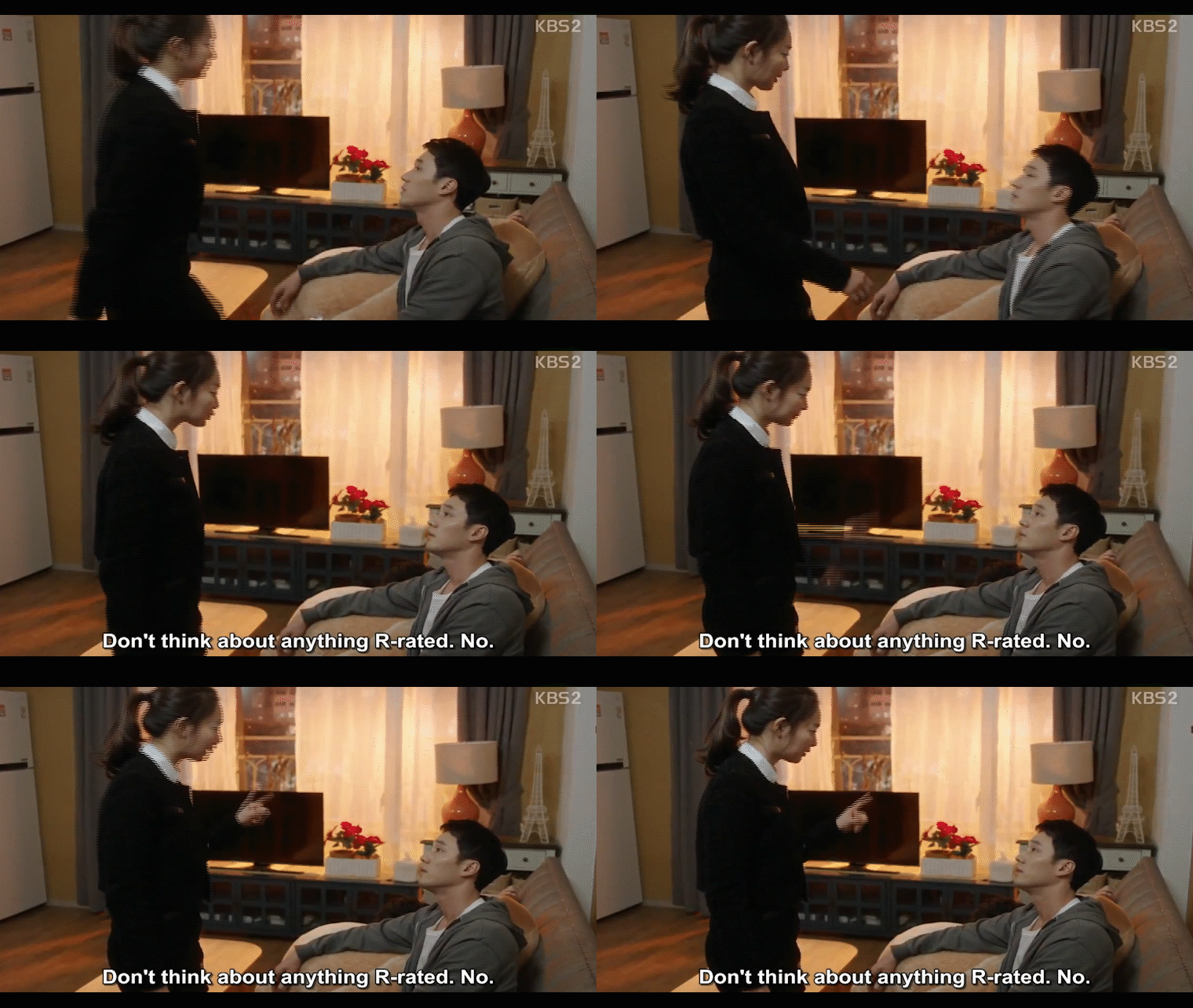
To understand this style, it’s helpful to distinguish it from content that often contradicts the chivalric code. Old-Fashioned Chivalrous Romance avoids:
1. Gratuitous or Exploitative Content
- Explicit Material: Stories that are overly explicit, raunchy, or crude. This includes unnecessary nudity or profanity used for shock value rather than artistic purpose.
- Objectification: We reject the unnecessary objectification of men or women and stories steeped in a misogynistic or disrespectful culture.
- Lust-Based Narratives: Romance should be about soul connection; old-fashioned romance avoids stories that base romance solely on physical lust.
2. Cynical or Antagonistic Storytelling
- Anti-Romance Sentiments: We avoid narratives that take an antagonistic or mocking stance toward love, hope, and romance.
- Overt Cynicism: Modern Romanticism is optimistic; it is not unemotional or intentionally “gritty” just for the sake of realism.
- Hollow Connections: Stories that lack a deep human bond or genuine emotional connection between two people.
3. Fragmented Character and Romantic Development
- Transitory Dating Trends: While we embrace modern settings, we look for more than “casual hookups,” “hanging out,” or ineffective communication styles typical of modern dating tropes.
- Weak Narrative Buildup: We look for proper character and romantic development. We avoid stories where the “love” feels unearned, lacks buildup, or doesn’t stay true to the characters’ established personalities.
ADDITIONAL THOUGHTS ON OLD-FASHIONED CHIVALROUS ROMANCE

The old-fashioned, chivalrous romance genre is in danger of becoming extinct in modern entertainment. So, we aim to bring old-fashioned chivalrous romance back by promoting the stories that embrace it, from the sweeping, epic romances like Titanic to the classic love stories of Jane Austen, to the unabashedly romantic international dramas, to the witty romantic comedies, to great literature that makes our hearts skip a beat, and more. And all without continuous explicit content and crude depictions.
Old-fashioned chivalrous romance is like the butterflies you felt in your stomach when you had your first crush. Or the time you felt the wonder of first love in your heart. It makes you smile, cry, and believe in true love, fairy tales, and happily-ever-afters.
It’s like when you were a teenager and stayed up all night reading a good book because you had to know the ending. It’s about emotions, feeling deeply, and what’s on the inside, not the outside.
Old-fashioned chivalrous romance is like the silly fantasies you had as a teenager about the popular guy or the pop star swooping in and asking you to the school dance—and all in grand, ridiculous fashion.
Old-Fashioned Romance Is Like A Good Fairy Tale

Yes, some may argue that old-fashioned chivalrous romance is unrealistic and dangerous. However, we take the opposite view. Like a good fairy tale, old-fashioned chivalrous romance and depictions of soul love present an optimistic message.
Even if some of these stories are “unrealistic,” they teach us something real, even if shown in a fantastical setting. That love exists. And it’s okay to embrace optimism, the joys of life, and our child-like dreams even in the darkest times.
In The Uses of Enchantment: The Meaning and Importance of Fairy Tales, psychologist Bruno Bettelheim on the message/lesson of fairy tales (to which old-fashioned chivalrous romance relates), said: “…a struggle against severe difficulties in life is unavoidable, is an intrinsic part of human existence – but that if one does not shy away, but steadfastly meets unexpected and often unjust hardships, one masters all obstacles and at the end emerges victorious.”
Romance Isn’t Dead
Fantastically said. Besides, we say, why does romance have to be dead? Can’t equality and chivalry exist side by side?

Sure, we know an immortal vampire or a Doctor in a blue box isn’t going to swoop in and save us from the ordinary hardships of life. Or believe that life is actually like a romantic comedy. Not that there’s anything wrong with taking a stand and saying, “You know what? I would like to have respect and consideration and deep conversations.” It’s not unfair to ask for loyalty, honesty, and real love.
But sometimes, a good old-fashioned love story is meant to cheer us up when we’re having a hard time or a bad day!
In a modern world, good old-fashioned chivalrous romance in entertainment is often looked down upon, even though many of us secretly (or not so secretly) love it. Well, it’s time to bring back the romance in all its glory. Everything old becomes new again, after all.
If you’re new to old-fashioned chivalrous romance or would like some good reminders or recommendations, we have compiled a list of great examples that are a good starting point. These lists are not comprehensive; they are just a few good examples.
A FEW EXAMPLES OF OLD-FASHIONED CHIVALROUS ROMANCE IN LITERATURE
- Austenland by Shannon Hale
- Edenbrooke: A Proper Romance by Julianne Donaldson
- Emily of New Moon Trilogy by L.M. Montgomery
- Emily Wilde’s Encyclopaedia of Faeries by Heather Fawcett
- The Ghost Bride by Yangsze Choo
- Grand Sophy by Georgette Heyer
- The Guernsey Literary and Potato Peel Pie Society by Annie Barrows and Mary Ann Shaffer
- Isabelle and Alexander by Rebecca Anderson
- Jane Austen Society by Natalie Jenner
- Jane Austen’s books. Our personal favorites are Persuasion and Pride and Prejudice.
- Jane Eyre by Charlotte Brontë
- North and South by Elizabeth Gaskell
As a note, several classics have old-fashioned chivalrous romance interwoven into the story. There are many more modern options available as well.
A FEW EXAMPLES OF OLD-FASHIONED CHIVALROUS ROMANCE IN MOVIES

- An Affair to Remember
- Becoming Jane
- Belle
- Bend It Like Beckham
- Casablanca
- Cinderella (2015)
- City Lights
- Crazy Rich Asians
- Ever After
- Kate & Leopold
- La Belle et la Bête
- The Lake House
- The Little Mermaid
- Mansfield Park (1999)
- Mr. Malcolm’s List
- Notorious (1946)
- Now, Voyager
- Penelope
- Pride and Prejudice (2005)
- The Princess Bride
- Sleepless in Seattle
- Strictly Ballroom
- A Walk to Remember
- You’ve Got Mail
Old-fashioned chivalrous romance is easy to find in period dramas, classic films, fairy tale adaptations, and romantic comedies. However, this is not an exhaustive list; it is just a few good examples.
A FEW EXAMPLES OF OLD-FASHIONED CHIVALROUS ROMANCE IN TV SHOWS & MINISERIES
- Anne of Green Gables & Anne of Avonlea (1985; 1987)
- Chuck
- Dark Angel
- A Discovery of Witches
- Doctor Who (2005)
- Downton Abbey
- The English
- Gilmore Girls
- Grand Hotel (2013)
- The Hour
- Jane Eyre (2006)
- La Femme Nikita
- Lost
- The Master’s Sun
- The Mentalist
- Merlin
- Miss Fisher’s Murder Mysteries
- Miss Scarlet and the Duke
- Moonlight
- North and South (2004)
- The Originals
- The Paradise
- Poldark (2015)
- Pride and Prejudice (1995)
- Pushing Daisies
- Roswell
- Sanditon
- Sweet Magnolias
- The Vampire Diaries
- Victoria
- The X-Files
Many of these shows focus on old-fashioned, chivalrous romance. But some shows don’t make it the focus. For example, CW’s The Originals is more about immortal vampire siblings than their love lives – even though that’s also important. The story of Klaus and Camille presents a great example of an old-fashioned romantic love story.
ANSWERS TO QUESTIONS
Does a film/book/show need to be a romance to be an old-fashioned, chivalrous romance?
No. Old-fashioned chivalrous romance can be found in any category or genre.
What if an explicit bedroom scene is in a movie or TV show? Or it’s R-rated or TV-MA? Does that automatically exclude it?
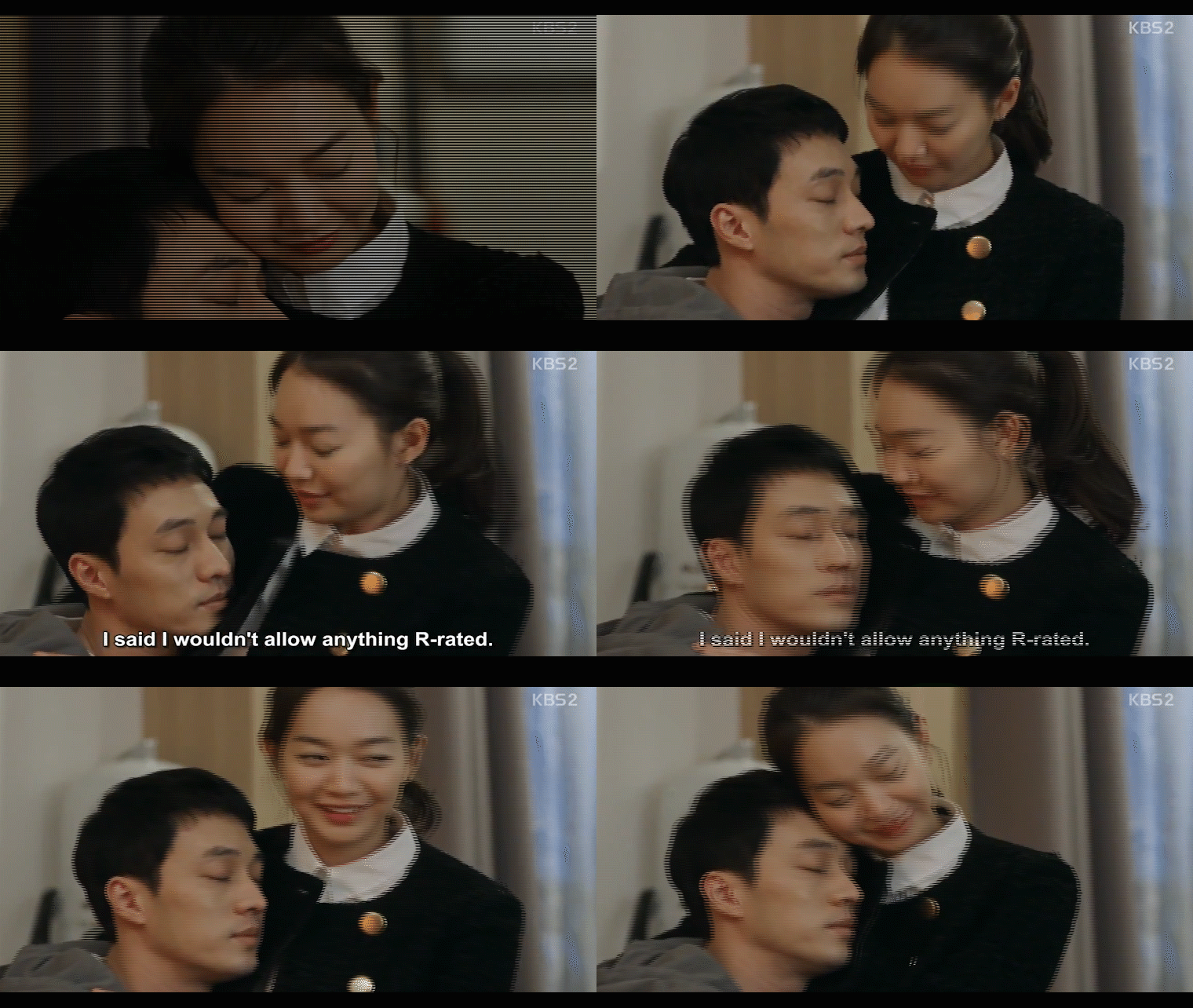
No. While Old-Fashioned Chivalrous Romance is often ‘closed-door,’ it is defined by the priority of emotional intimacy. Even in more explicit shows like Outlander, the ‘Old-Fashioned’ element (at least between Claire and Jamie) remains (at times) because the physical connection is presented as an extension of a soul-deep commitment and chivalrous respect.
But generally, old-fashioned, chivalrous romance is less steamy. But there are exceptions to every rule! We consider love stories holistically and evaluate them based on their adherence to romantic traditions. Not every romance needs to be old-fashioned and chivalrous to be great.
This guide was created and is maintained by Amber & Autumn Topping, founders of The Silver Petticoat Review.
For more about what we cover, see our About Us, Romantic Living 101, and Modern Romanticism 101 guides.